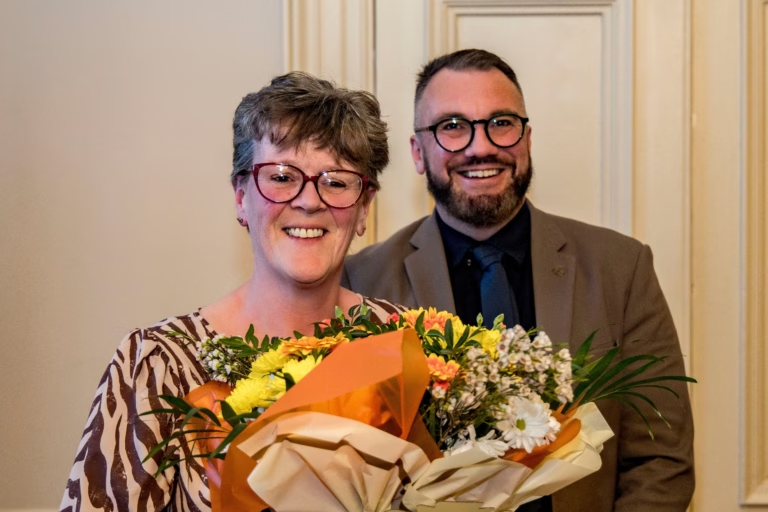
In this heart-warming story, we hear from Linda and Richard—two experienced carers who opened their home to children with additional needs through the Share the Care scheme. Share the Care fostering, for them, started as a desire to give something back turned into a life-changing experience for everyone involved.

A natural next step
Linda and Richard aren’t new to working with young people. Between them, they’ve spent decades in youth work, education, and care—including youth justice and supporting vulnerable children. They’ve seen the challenges young people face, and they’ve always wanted to be part of the solution.
“We’d talked about fostering for a long time,” Linda says. “We’ve always worked with young people, and we just wanted to give something back.”
Their journey into fostering began during the COVID-19 pandemic. It took nearly a year to get through the paperwork, but eventually, they were matched with two brothers who needed short breaks from home.
Structure, support and a lot of Lego
The boys had learning difficulties. “One of them didn’t speak at all at first,” Linda remembers. “And the other was really behind in school. They were lovely boys, but they’d had a tough time.”
Linda and Richard brought their experience—and their warmth—into their home. They didn’t talk about “rules,” but instead created a “contract” with the boys: things like eating together at the table, helping to lay it, and clearing up after meals.
“We just wanted to give them a sense of routine and respect,” Linda says. “And it worked. They responded so well.”
There were challenges—tantrums, communication barriers, and a lack of confidence—but also huge wins. The older boy would get frustrated with Lego and storm off. But Linda gently helped him find ways to manage his emotions. “We told him his room could be his safe space. And over time, he stopped running off and started asking for help instead.”
One of the biggest breakthroughs came when the younger boy—who hadn’t spoken—started talking while playing Lego with Richard. “That was a huge moment,” Linda says. “And the older one, who struggled with reading, turned out to be brilliant at maths. He was so proud of himself. And we were proud too.”
They took the boys on walks, across the suspension bridge, to parks and parties. “They’d never done things like that before,” Richard says. “But by the end, they were asking to go to a party every week!”
They introduced the boys to new experiences—walks in the park, crossing the suspension bridge, even cooking pizzas on a wood burner. “They were scared to try things at first, but we worked through it. We challenged them, and they grew.”
Why Share the Care works
Linda and Richard love the Share the Care model. “It’s short breaks—maybe a weekend or a night a week. That means you can plan fun things, give the children something to look forward to, and give their parents a bit of a break too.”
They even had “planning meetings” with the boys when they arrived. “We’d sit down and decide what we were going to do—make macaroni cheese, watch Harry Potter, go to the park. It gave them a sense of control and excitement.”
The role of Social Workers: “You’re not on your own”
One thing Linda and Richard are clear about is how vital social worker support is.
“We were lucky—we had Jackie, and she was brilliant,” Linda says. “You need to know your social worker is on your side. That they’re there for you, not just the children.”
They also stress the importance of training and clear guidance—especially around safeguarding. “If we’d known everything about allegations and risks upfront, we might have been put off,” Richard admits. “But having that support and knowing you can pick up the phone and talk to someone makes all the difference.”
They believe social workers should be seen as allies, not inspectors. “Some people are scared of social workers, but they’re there to help you succeed. We couldn’t have done it without ours.”
Advice for new carers
So what would Linda and Richard say to someone thinking about becoming a Share the Care carer?
“Talk to the children. Ask them what they like, what they want to do. Make them feel heard. And enjoy it—because honestly, you get so much out of it.”
They add, “Every child is different. You’ve got to be flexible, open-minded, and make sure you’ve got the right support. It’s challenging, but it’s so rewarding.”
And their golden rule? “You only get out what you put in.”
Thinking about fostering?
Linda and Richard are foster carers with South Glos Council. Their story shows just how powerful short break fostering can be—for children, their families, and the carers themselves. If you’ve ever thought about fostering, even just for a weekend a month, Share the Care could be the perfect place to start.