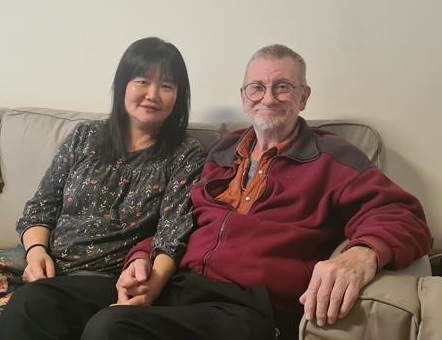
As part of National Refugee Week 2025, South Glos Foster Carers Tim and Joyce shared their experience of fostering an unaccompanied asylum-seeking child (UASC).
Why we wanted to foster
“Our desire to foster started years ago when we were living in Hong Kong. We looked into it seriously, but the system there made it difficult. There were cultural barriers, limited space in our flat, and the process wasn’t as accessible as it is in the UK. We had young children and demanding jobs at the time, so it just wasn’t feasible. But the idea never left us.
“When we moved back to the UK in 2022, we finally had the space, time, and opportunity to revisit fostering. After attending a local job fair and speaking with several agencies, we decided to go through our local authority, South Gloucestershire. It felt like the right fit—structured, supportive, and community-focused.”
Fostering Unaccompanied Asylum-Seeking Children
“What’s interesting is that we hadn’t originally planned to foster older children. We were thinking about children aged 0 to 7, partly because our own kids were still young. But during our assessment, our social worker asked us, ‘Have you ever thought about fostering an unaccompanied asylum-seeking child?’
“At first, we didn’t even know what that meant. She encouraged us to look it up, and we did. That was the first time we really understood what it meant for a child to arrive in the UK completely alone.
“It was a turning point. We realised that these young people often come from incredibly difficult circumstances—some are sent away by their families for their own safety. It challenged our assumptions and opened our eyes. We changed our approval range to 0–18, which gave us more flexibility and allowed us to be considered for a wider range of placements.”
Meeting our young person
“Not long after we were approved, we got a call about a 16-year-old girl who had recently arrived in the UK from Somalia.
“She had been brought into the country by a stranger and left alone in London with no documentation, no support network, and no understanding of where she was. Her journey had been traumatic, and she had already spent time in temporary care in London before being moved to us with very little notice.
“We didn’t have much information before she arrived—her country of origin was even listed incorrectly at first—but we said yes. We prepared a Somali meal to welcome her, hoping it would offer some comfort.
“When she arrived, she was understandably nervous, confused and disorientated. But from the beginning, she was polite, respectful, and eager to settle in. Our children quickly took to her, calling her “Jer Jer,” which means “big sister” in Cantonese.”
What helped us prepare
“Our backgrounds helped a lot. Tim had taught English in Hong Kong for years, and Joyce had learned English as a second language. We both understood how hard it can be to adapt to a new culture and language.
“We’d also lived in a multicultural environment and had a long-term Muslim domestic helper, so we were already familiar with some of the customs and sensitivities that would be important in supporting our young person.
“We started teaching her English and maths and she’s made incredible progress. When she arrived, she had very little English and was using a translation app and a translator for meetings. Within a few months she didn’t need those anymore.
“And she’s now in a full curriculum at a local college and is thriving. She’s also a fantastic cook, has learnt to sew and has picked up 3D printing. She is very eager to learn.”
Learning goes both ways
“We’ve learned just as much as she has. Understanding her cultural background has helped us support her better—from respecting her need for privacy to sourcing halal food and navigating the difference in cultural gender norms.
“We’ve also had to rethink things we take for granted, like swimming lessons or casual clothing at home, which can be more complicated for someone with her background. Talking to her helps us understand more about her cultural background and how we can best support her.
“We also help and support her with things like appointments and formal paperwork and processes. We’ve had lots of battles with the college about her education!
“We took her to the Somali Resources Centre in Bristol to connect with her community and she now volunteers there. They helped her reconnect with her older brother, who’s studying radiography at university, and she’s hoping to move in with him in future.
“She has become increasingly independent. She travels on her own, manages her schedule, and is thinking seriously about her future.”
Looking ahead
“We’re incredibly proud of how far she’s come. When she first arrived, she relied on translation apps. Now, she confidently manages her life in a completely new country. She’s ambitious, thoughtful, and determined to succeed. We’ll definitely miss her when she moves on.”
Why this matters
“Fostering an unaccompanied asylum-seeking child isn’t always easy, but it’s incredibly rewarding. It requires patience, cultural awareness, and a willingness to adapt. We’ve seen first-hand how the right support can help a young person not just survive, but thrive.”
Fostering Unaccompanied Asylum-Seeking Children
There’s a growing need for carers who are open to this kind of fostering. If you’re considering it, we’d encourage you to learn more. Here are some helpful resources:
- National Refugee Week 2025 – Learn more about this year’s theme and how to get involved.
- The Fostering Network – Fostering Unaccompanied Asylum-Seeking Children – Guidance and support for foster carers.
- UK Government – National Transfer Scheme Protocol – Information on how unaccompanied children are supported across local authorities.
About Tim and Joyce
Tim and Joyce have spent the past year fostering with South Gloucestershire Council. After relocating from Hong Kong to the UK with their two children and four cats, they embraced a new chapter by becoming foster carers. Tim, a former civil servant and English teacher, and Joyce, who ran a design and merchandising business, quickly immersed themselves in their new community. They actively support both the growing network of Hong Kongers resettling in the UK and their local village residents’ group. Now living in Yate, they continue to make a meaningful impact through fostering and community involvement.
Could you foster a child or young person?
Get in touch! We’d love to talk to you.